16 Nov 2026 · Theory
How do things come to belong to a planet's series? And why is a table a memory, not a law?
For Jupiter I still raised a glass by the book. At my first planetary initiation, the libation was "a glass of my favorite Scotch Whisky Glenmorangie"[1], which is exactly what Rufus Opus asks for: your best single malt.
After that it went downhill, at least by the book's standards. RO lists drink options for every planet, but there was never enough variety of alcohol at home, and the tea was just....tea. So for every sphere after Jupiter I was badly prepared and had to improvise.
The boldest substitute was for Selene. In early 2021 I briefly lived in a row of caves carved into the basalt in the rural south of Tenerife[2]. I did the initiation in a rush, with about fifteen minutes of preparation, and the libation was water from the tap! RO suggests absinthe, mead or a white wine with a hint of apple or pear, and he ends the libation with one more instruction: "If it's alcoholic, ignite it"[3]. Try that with tap water...
But to be fair, it was the tap of a cave house in the middle of nowhere, so the water came straight from a source in the rock. I had even gone looking for where it came from, and on the hill above the house I found one of the island's galerías, the tunnels dug into the mountains to get to the water inside them. For the incense I had the local incienso, a wormwood that grows all over that part of the island. Neither of them is in RO's book. Both felt right.
The question this article tries to answer is: if tap water can be the Moon's, what makes anything the Moon's? Where does a correspondence live?
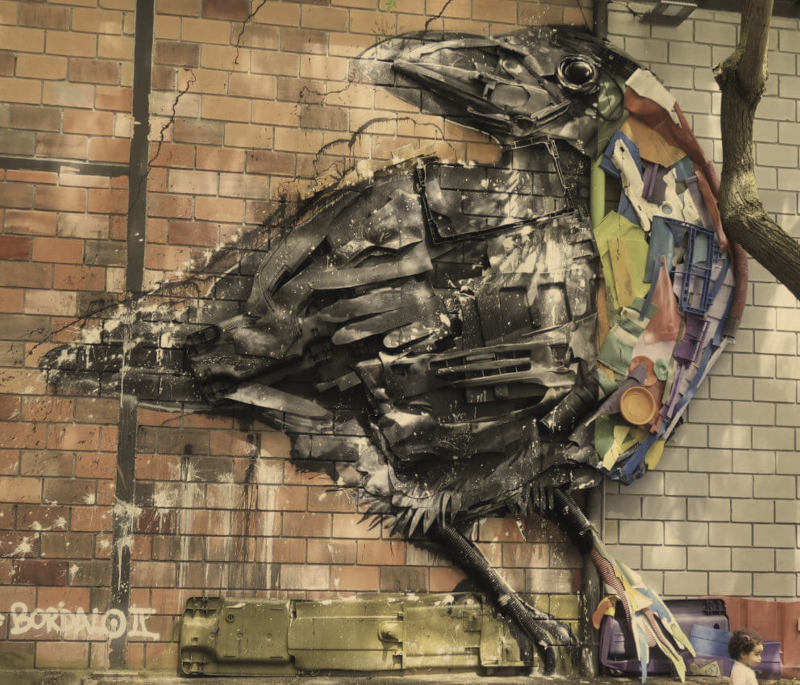
Of course the clearest lesson came from Saturn, a year earlier on the same island. I told it in Canary Capricorn: a burnt pine whose branch came down crooked like a sickle, a hedge of morning glory, a crow made of plastic trash, and a rite in a galería shaft in the forest.
Reading it again now, it strikes me how I read it all at the time: Every find went straight to the table. "A Saturnian plant!" "A Saturnian animal!" On the Jupiter trip the year before, I saw storks and found a board game, and reached for my phone:
A quick online search [...] confirmed what I had already anticipated: storks are associated with Jupiter. Chess too.[4]
A find counted once the table said yes. The game I had found wasn't even chess, it was Go.
Yet I still do it like that: find, feel, check. What changed is what I think I'm checking against. Back then I treated the table as law, a record of where a planet's virtue lands, and checking meant asking whether a find was legit. Today I think of it as a memory, of everyone who found a crow before me and tied it to Saturn. Checking means asking whether anyone has been here before.
Agrippa's tables list the crow for Saturn[5], and some modern ones the morning glory[6]. But the table could only confirm my finds, it couldn't have predicted a single one. It has a cell for crow, none for a crow made of trash. It has a cell for wood, maybe pine, none for that scorched pine, or the one branch that came down shaped like his sickle. What found me wasn't the category, it was this crow, this hedge, this branch. Isabelle Stengers, on an Omaha prayer to a boulder:
[it is] not a boulder, a 'block of stone,' the Omaha addresses, but this boulder, in this place where it rests, of which it is an integral part[7].
And every time someone writes down a find like that, the memory grows. So the question changes. Not "is this Saturnian?" but "what tied it to Saturn, and did the tie hold?"
If these finds are correspondences, what are they correspondences of? The best answer I know is a Kemetic one.
The old Egyptian word we translate as "god" is nṯr (netjer), plural nṯrw (netjeru), and the translation loses most of it. A netjer wasn't a person living somewhere above the world, and it wasn't a principle behind it either. A netjer was at home in things. Erik Hornung, writing about the sacred animals:
Individual animals are not the god, but the god may take up his abode in them; they allude to him and are images and vessels of him[8].
Vessels. Like a scrying sphere. And vessels can be made. The temple statues, which the gods "enter", were made of the most precious materials "in order to resemble the true body of the god as closely as possible", and a priest served them every day[9]. The god lives in what people make and keep.
Take Bastet. Herodotus, travelling Egypt in the fifth century BC, found her in her city, Bubastis, at the festival Egyptians kept "with the greatest zeal and devotion". They came by boat, crowds in every boat, with rattles and flutes, and "more wine of grapes is consumed upon that festival than during the whole of the rest of the year". And when a cat died anywhere in Egypt, it was carried to Bubastis, embalmed and buried there[10]. The cat, the city, the rattle, the wine: none of them is Bastet, all of them are where she lives.
Herodotus, being Greek, filed her under Artemis. That's what a table does. The Egyptian priest in the daily cult had to say the opposite, in front of the god's image: "I have not equated your nature with that of another god"[11].
Hornung's best line on the netjeru is that they are "formulas rather than forms", never finished, always "under construction" like their temples[12]. Not an essence that cats and wine copy, but a combination that keeps taking things in. That combination is what I call a god's series.
That doesn't mean the Egyptians kept their gods apart. They combined them all the time, and Amun-Re is only the best known. But Hornung, following Hans Bonnet, insists that a combination like that is not an equation. The Amun-Re formula
observes that Re is in Amun in such a way that he is not lost in Amun, but remains himself just as much as Amun does, so that both gods can again be manifest separately or in other combinations[13].
Bonnet's word for this kind of syncretism is inhabiting, the same move as a god taking up his abode in a cat. Herodotus' table put Artemis in Bastet's place. Amun-Re keeps both.
That's how I'd read Saturn on Tenerife. The Romans had filed the Carthaginian Baal-Hammon under Saturn, and that equation is how I found him on the island[14]. But what I met there wasn't a table entry. Saturn was at home in Baal-Hammon, "physically present on every inch of the Canarian isle", as I put it in Call of the Siren, and neither was lost in the other. His consort Tanit was at home in the same way in the Virgin of Candelaria, the island's patron. The burnt pine, the hedge and the crow weren't messages from a planet up there. They were Saturn's formula as it happens to be written on Tenerife.
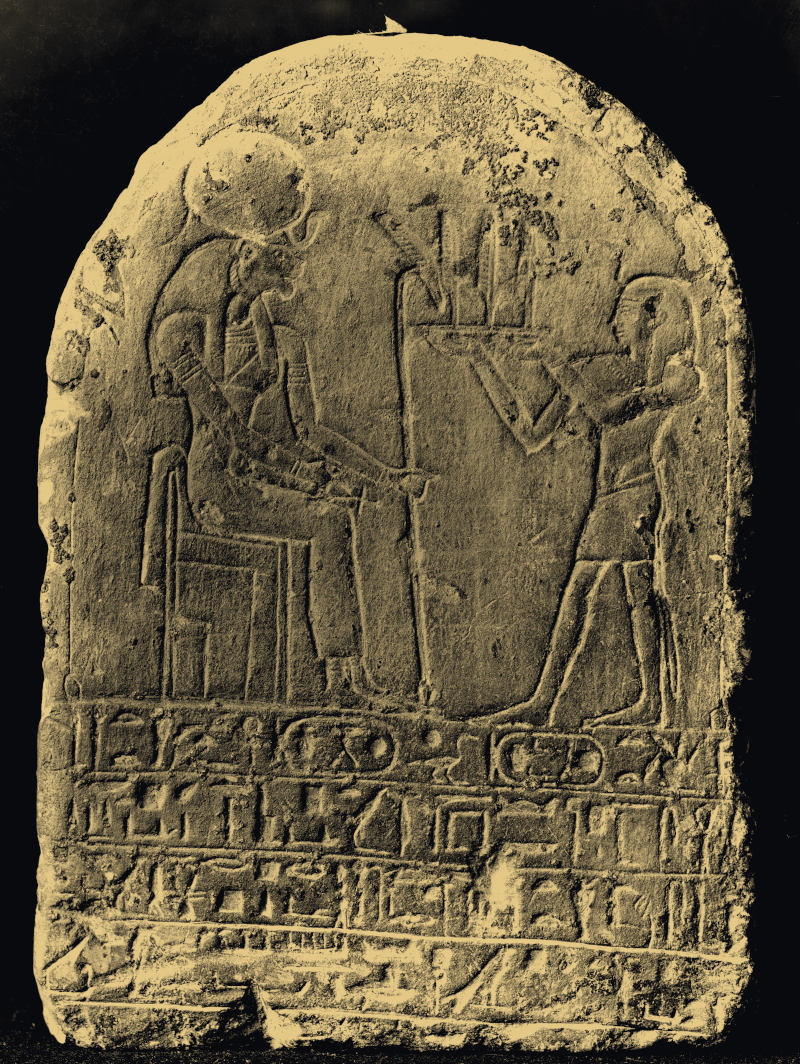
At Bubastis, Bastet wasn't only in the cats and the wine. She was in the crowds in the boats too, in their rattles and their drinking. A vibe can be a vessel. That's also why a place can put you in one. A grey city can make you Saturnian. After the Jupiter rite I wrote that my mind and the world are "not two separate worlds, but rather different points of one spectrum"[4], and I'd still sign that.
A friend asked me the obvious next question. If metals and plants have their planets, does the psyche have them too? Is astrology an outer map of an inner system? Modern astrology mostly says yes and moves the planets into the head: Saturn becomes a complex, a part of you. I would say the answer is: neither. There aren't two systems, one inside and one out. There's one formula or series, and a mind is one more thing it takes in, the way Bastet took in the cats and the city. Saturn in a mind isn't a picture of Saturn out there. It's Saturn there, the same character taken up as slowness, weight and a pull towards solitude, the way a pine or a crow takes it up.
Where planet and 'psyche' fit neatly, part of the reason they fit is copying. Saturn wasn't always the planet of melancholy. Astrologers and physicians tied them together over centuries, and Ficino turned the tie into the planet of scholars[15]. For him you didn't need to be born under Saturn to come under him. You could get there by what you did:
by withdrawal from earthly things, by leisure, solitude, constancy, esoteric theology and philosophy, by superstition, magic, agriculture, and grief, we come under the influence of Saturn[16].
People learned to feel Saturnian from the tables, and the tables learned from them. Ficino built Saturn a new vessel, the scholar at his desk, and Saturn moved in.
Sublunar Ontology
A god is a character carried by a series: everything it has ever been, still there to be taken up, woven through stones, plants, animals, places, days and people. A correspondence is one of those threads. Nothing flows down it from above. It holds because the members hold each other. And one god can be at home in another's series without either being lost.
So how does a thing join a planet? Ramsey Dukes has a theory of how the tables got made. Magic starts with a feeling for "what goes with what":
when rationalism takes over there is an urge to systematise and try to 'pin down' this feeling, [until] we inherit the highly complex tables of cabalistic correspondence[17].
Pinned down, every entry looks the same: a word in a spreadsheet cell. But they didn't get there the same way, and they don't hold the same way either. I can see several ways in.
The strongest one is shared constraint: the Moon pulls the sea. Nobody had to agree on that. Ptolemy gave the Moon her moisture for physical reasons too: she is close to the earth and its moist exhalations[18]. The Moon and water are held together by the world itself. A tie like that needs no tradition. Burn every table and someone would find it again.
Another strong tie is contact: for Jupiter I put an olive branch on the altar that I had taken from a small tree next to the altar of Bona Dea in Croatia[1]. The Moon got the incienso that grows around the cave house, Mars the dragon's blood I harvested on Tenerife myself, the Sun a table of practice I built with my own hands. A contact is felt intuitively and it holds where it was made.
A similar but weaker tie is likeness: the sickle branch. Or the room in La Orotava where I did Venus under the tapestry over the bed: the Star card, a naked woman rising from water towards a radiant star, with the sign of Venus among the symbols, "the most venusian version of the Star card I had ever come across"[19]. The qualities it runs on are real. The crook of the branch and the water in the picture aren't something my mind adds to things[20]. Why are they weak? Because on its own a likeness is just one coincidence. Plenty of branches are crooked. Likenesses become contact when they accumulate to synchronicities.
Ties don't just happen, they can also be made intentionally, for example through offering: Edward Butler on the Eye of Horus:
Whatever is the substance offered, once it has been made a divine offering it becomes the Eye of Horus[21].
Giving is a way in of its own. Isis' knot was carved from red stone for her blood and then charged with the words "Thou hast thy blood, Isis"[22]. A likeness, sealed by an offering. And the Moon's tap water became hers by being poured into the ground.
The most common tie is obviously copying: RO's list. The Glenmorangie was a fine Jupiter, and the list got me started. A copied entry means something because of the other entries around it, the way a word means through the rest of the language[23]. That's why a table holds even when nothing outside feeds it anymore, and why it can go stale: a closed loop. Herodotus filing Bastet under Artemis was copying too. Donna Haraway's line, via Stengers, is the right warning: "It matters which ideas we think other ideas with"[24].
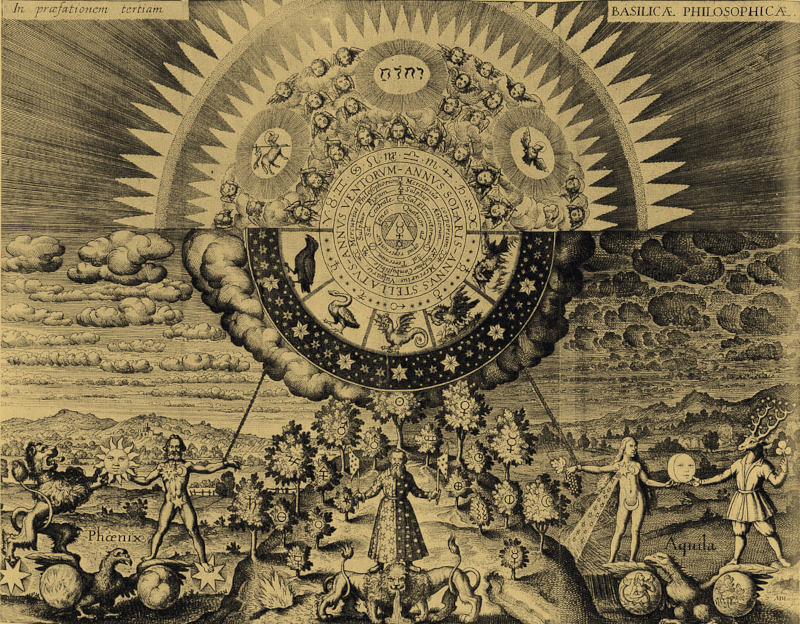
Back to the jigsaw puzzle from Dropping Crystal Balls: a piece is held by its neighbours[25]. The more ways a thing is tied in, the better it holds. The Moon's tap water was tied three ways: by the Moon's pull on water, by the source in the rock it came from, and by the pouring. None of them are on RO's list. The sickle branch is tied twice, by its shape and by the place it came from. And a thing can be tied to more than one planet. The galerías gave the Moon her water and Saturn his dark hollow in the rock, but not by the same tie: the water is the Moon's by constraint, the hollow is Saturn's by likeness and by the rite I did in one. Saying which tie does the work prevents "several" from meaning "anything".
Sublunar Ontology
Belonging is never decided in advance, for a crow, a planet, or a god, no more than for a person and a family. Every whole is held up from below by its members' ties. Some of those ties are kept by habit alone, through shared constraints: the Moon and the sea renew theirs with every tide, whether anyone notices or not. Others last only while someone takes them up. A whole that stops taking in new members becomes a closed loop, living off its memory. And belonging runs both ways: every member that takes up a character changes it a little, which is why no table is ever complete.
A table of your own grows one find at a time. Here's how I'd go about each one:
My Jupiter week would have failed that test. The day after the rite I walked through Ludwigshafen, and everything there felt Saturnian: the chimneys, a fallen Prometheus outside a school, even a branch of the Saturn electronics chain. I filed it all under Jupiter, by way of Zeus' Titan ancestry. At the time I even wondered "if all of this was already meant for me to think about or if I am just a mythology nerd"[4]. Today I'd say: mythology nerd. If Saturn counts for Jupiter because Zeus overthrew him, anything counts. The grey was real, and it was Saturn's. Filing it under Jupiter was mine. But I forgive myself. It was the first ever initiation, my Cup was wide open and I'd forgotten to bring the Dagger.
The sickle branch lies in a basement in Berlin, with everything I couldn't take to Israel. That's most of my materia magica, because how do you explain a box of resins, seals, feathers, blades and a burnt branch to the strictest airport security in the world?
That box is my personal correspondence table. Every object in it was tied to a planet once. But stored like that, with no rites since, it has become a closed loop.
The house we live in now also felt like a closed loop, and very Saturnine. It belonged to my wife's grandparents, artists who kept everything. It feels cursed. The house slows everything down. Any attempt of proper renovation. But instead of fighting it I added to the series: I planted morning glory to grow over the dead tree in the yard. It flourishes like nothing else around the house.