10 Oct 2026
Part three of a hazy and mazy philosophical dungeon crawl about progressive but haunted political theory and praxis and bottom-up process ontologies for the End Times that emerged out of conversations with The Others on Discord.
In the first part we mapped out the Gnostic Kenoma of Capitalist Realism and the Gnosis of Acid Communism. In the second part we pulled the red thread through digital acceleration and hypostitional collapse toward the pull of the Outside Attractor. Now, let's descend into the liminal void of the pandemic, where time warped, and something terrifying, tender, and possible tried to emerge.
In the previous discussion, I already briefly touched on the COVID‑19 pandemic as a kind of catalyst for the systemic changes already set in motion in the years preceding it.
Here, I want to force our attention back to what many have worked hard to forget and put more emphasis on how COVID-19 manifested as a too visceral, world-changing threshold between what was and what came after. Half a decade has already passed and most of us have managed to piece together a new narrative, so we could get back to a routine and a normal life. This is a remarkable feature of us as humans that allows us to persevere and continue on, no matter what.
Yet when we think ourselves back to 2021 there is a lingering feeling of shared rupture in our sense of continuity and belonging, fuzzy and blurry. If we honestly compare life before and after, it becomes impossible to ignore the existential tremor that shook the foundations of how we live, work, and connect with one another.
Let's go back to the "plague years" and take a closer look at what actually occurred in that valley of darkness. Besides the fear and suffering, wasn't there also hope?
As far as I remember the months leading up to the disaster most of us followed our daily lives, fought our struggles, pursued our dreams, took for granted some narrative framework that defined our reality: Capitalist Kenoma. And suddenly, out of nowhere we encountered the Black Swan: an impossible Other that our narrative had not anticipated. An unannounced experience of the Real:
The real is an altogether different matter than the possible, without any possible communication or mediation between the two. What lies outside possibility or beyond the range of possibilities – literally, the im-possible, or the event – is real, because the procedure whereby we fabricate the possible out of the real is always incomplete and deficient and falls short of the real. [...] Radical contingency, or the event, shakes the range of possibilities and updates a whole new world, which may be incompatible with the previous one. Historic events are history-changing.[1]
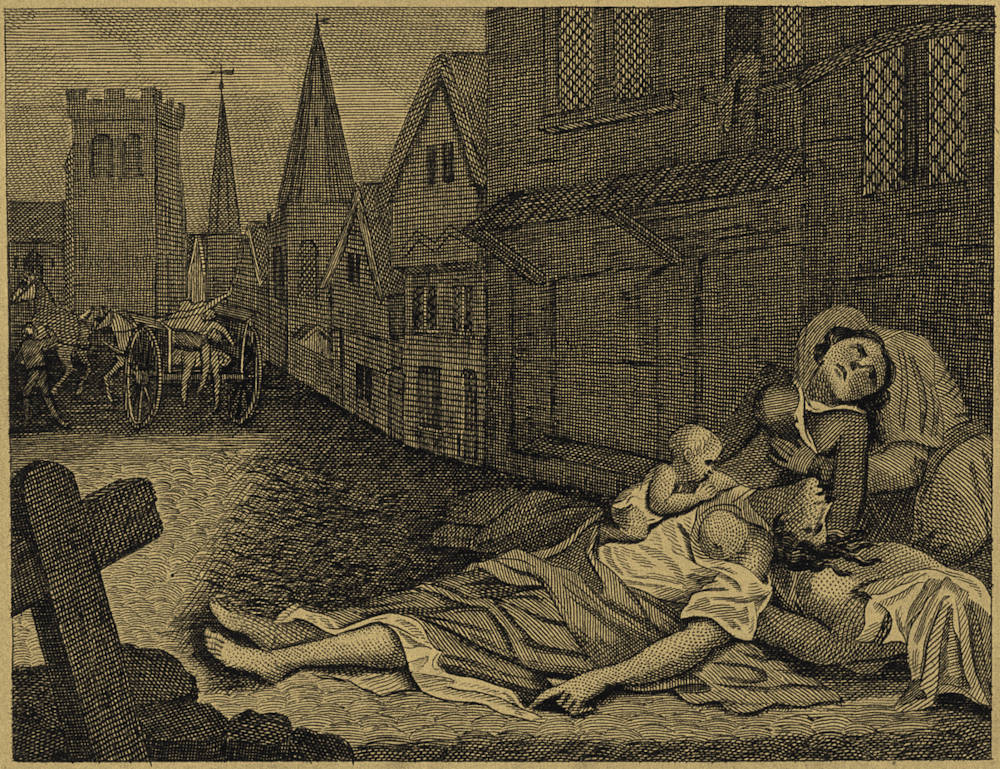
The Real manifested as a viral agent, alien to the immune system and to medical science. COVID-19 brought disease, suffering and death on a massive scale. Almost overnight it forced us to leave our workplaces and shopping malls, our factories, schools, and airports. Everyone grounded. Curfews confined us to our homes and confronted us with the reality of our fragile bodies and more importantly: our own finitude.
Death came peeking out of where we had hidden him for decades: behind closed doors, in hospices and convalescence homes. Death returned to where he used to belong: the midst of our homes, surrounded by family witnessing final moments.
The paradoxical, ambiguous nature of this moment is so confounding, so bewildering! I mean, how excellent that our arrogant species receives this collective slap-in-the-face reality check, waking us two-leggeds up to the simple truth that we are not at all in control, have never really been in control, that we live at the behest of powers—of a complex interplay of powers—far beyond our ability to fully fathom, to predict, or to steer. What hubris to have imagined we could do whatever we want with this exquisitely interwoven wonder of a world! And yet how awful that this lesson must come at the expense of so many unsuspecting human lives, so many innocent souls now shivering with fever and fright as they struggle to draw breath.[2]
Despite the zeitgeist of hypostitional reality-denial and conspiratorial scapegoating I will forever acknowledge and extend my gratitude to the countless care-workers and unpaid care-givers within and beyond our families who ceaselessly powered on to keep us fed, healthy, and alive. While these unwavering heroes sustained us, the frail systems scrambling to retain control over this unknown agent forced many of us into confinement, loneliness, and boredom.
This mandated dead time challenged our awareness of the meaningless distractions that once consumed our attention, and of the relentless pace that had come to define our lives, and it opened a capacity for interiority we forgot was possible. Stillness, quietude, suspended temporality that allowed inner monologue, undisturbed trains of thoughts, inner vision. Many of us were forced to deal with ourselves. Our world became more intimate.
And between the extreme modes of ceaseless care and the suspension of time came the temporal disorientation. Hours seemed to melt into days, days and weeks dissolved into some nebulous glob of experience. Everything seemed to be slowing down. Time itself stopped making sense.
Dead time—moments of withdrawal, of what old mystics called Gelassenheit, releasement—are crucial for the revitalization of our life experience. And, perhaps, one can hope that one of the unintended consequences of the coronavirus quarantines in cities around the world will be that some people at least will use their time released from hectic activity and think about the (non)sense of their predicament.[3]
COVID-19 brought everything to a halt, not just us as individuals. The virus landed some of its hardest blows on the most powerful nations and seemed to have stalled even the great engine of capitalism itself.
It suddenly laid bare the gaping structural faults of a system that have been papered over for decades: the corruption, the dynamics of exploitation, social injustice and biopolitics, biodiversity and violence, all the ignored shortcomings underlying our neoliberal reality.
The cognitive dissonance between our beliefs in functional systems of governance and the sudden exposure of their fictionality led many of us to question the very structures we once believed were holding the world together.
The unpopular but legitimate medical imperative for quarantine was eerily mirrored by a more primitive tribal impulse: the urge to redraw boundaries, to quarantine imagined enemies, and to protect our fragile identities under the guise of safety. Fake news, conspiracy theories, paranoia, xenophobia and racism exploded. The collective mind virus of Hypostition emerged, as contagious as the physical pathogen itself.
Given what the virus did to us and what we did to ourselves in response, we had many reasons for despair. [...] Our adversity elicited psychological responses that are common to our species: we felt sadness and grief; responded with anxiety, fear, and anger; and tried to hide the truth from one another and even from ourselves. [...] These emotional responses and behaviors can themselves rightly be seen as foundational parts of epidemics. We might even say that the definition of an epidemic disease should include the fact that it can have outsize psychological effects. [...] To cope with a plague in the twenty-first century, we responded not only with familiar interventions, but also with familiar feelings.[4]
Between the paranoia and conspiracy theories the pandemic also blew open the Overton window of long avoided conversations around topics like mental health or the rigidity of the 9-5 workday. It suddenly became socially acceptable to prioritize self‑care in ways unheard of before.
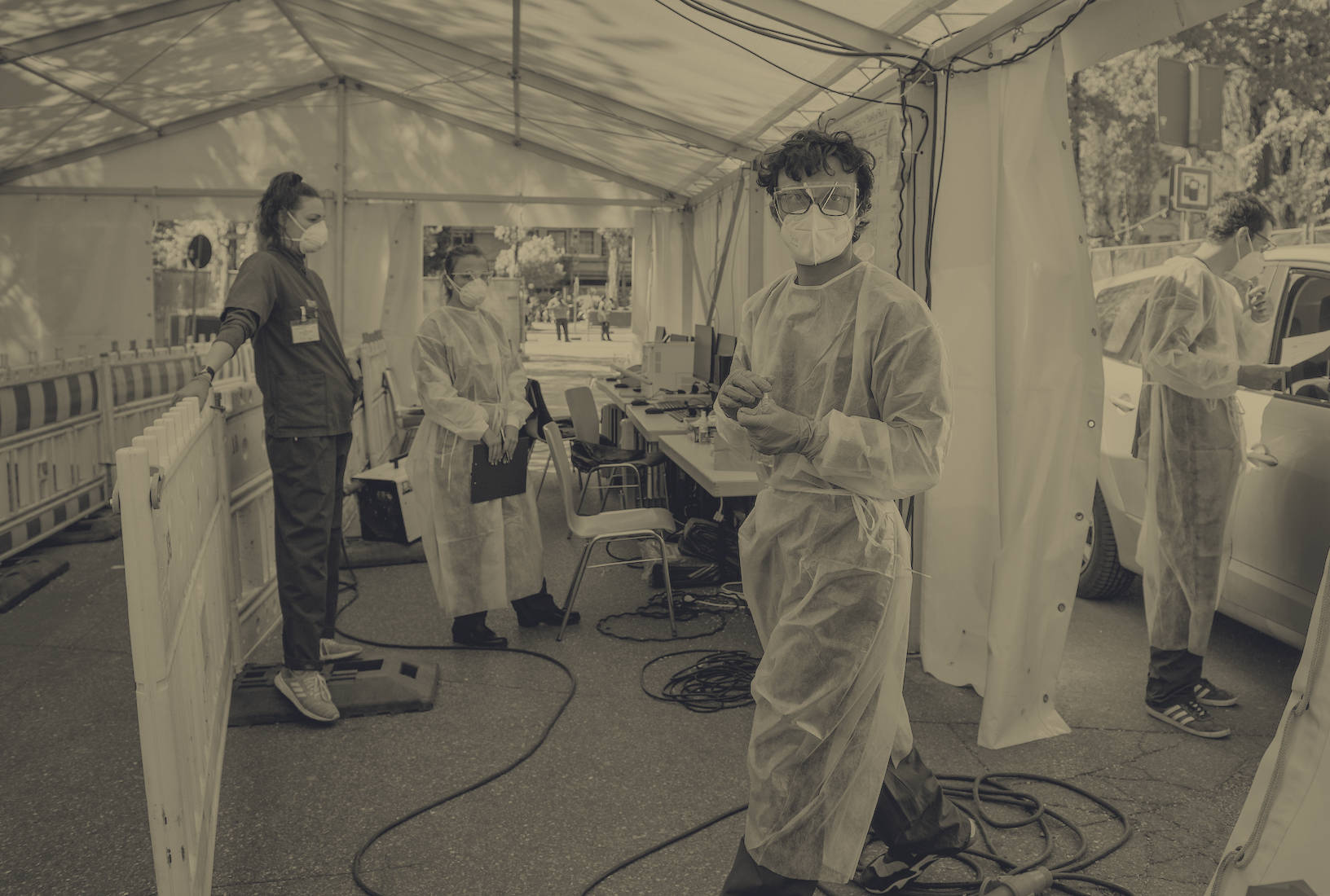
Remote work suddenly became feasible for many jobs, revealing our standard model of office work as arbitrary, exploitative, and unnecessarily taxing, often forcing people to choose between their career and their well-being.
Radical political and economic ideas that had previously been dismissed as unthinkable were suddenly back on the table: universal basic income, housing the homeless, generous investments into public health, reduction of weekly work days, shorter supply chains, local solidarity and an economy geared towards resilience rather than profit margins.
The Pleroma was suddenly imaginable on a mass scale. Something had suddenly re-emerged: "the spectre of a world which could be free".
Historically, pandemics have forced humans to break with the past and imagine their world anew. This one is no different. It is a portal, a gateway between one world and the next. We can choose to walk through it, dragging the carcasses of our prejudice and hatred, our avarice, our data banks and dead ideas, our dead rivers and smoky skies behind us. Or we can walk through lightly, with little luggage, ready to imagine another world. And ready to fight for it.[5]
Of course we were not the only ones noticing the emperor was without clothes. So did the powers that be. And they knew exactly how to exorcise this dangerous "spectre" that emerged out of interiority, contemplation, class consciousness, and the suspension of time itself.
By speeding things up, averting attention, undermining communality, asserting control. Fear was immediately weaponized as the driving force of hypostitional narratives: The virulent conspiracy theories got accelerated, driven by social media algorithms and political influencers. Fearmongering drove us apart, made us end friendships, relationships, rupture family ties. We got split into irreconcilable camps and incompatible individual identities.
There is no return to normal, the new “normal” will have to be constructed on the ruins of our old lives, or we will find ourselves in a new barbarism whose signs are already clearly discernible.[3]
Collectively we had a chance for change. We decided against it. Out of fear and confusion amid the uncertainties, lack of leadership, lack of vision, out of habit. It's tragic but understandable. We should not hold a grudge or grieve our inabilities. It's human nature.
The story of how exactly we lost hold of this momentum again, why and how we chose to forget is yet to be gathered, retold and analyzed in depth, but that is not a goal of this essay.
What I want instead is to hold this memory of the liberating potential for change, this fragile moment pregnant with real possibilities. Gnosis. Pleroma. Made possible by slowing down, by stopping the engine, by a sudden capacity for interiority, by communing with each other, by questioning Capitalist Realism, by class consciousness.
There is a war taking place in heaven concerning the soul of humanity, and it will be fought in each person’s heart, every day, without rest, and into the foreseeable future. I have no choice but to sound metaphysical and religious, because this is where the psyche goes when it enters the liminal.[6]
Most importantly we should remember where the potential for change came from: Not from an incursion from a cosmic Outside, but breaking out from the Inside. Inside of Us. From Underneath.
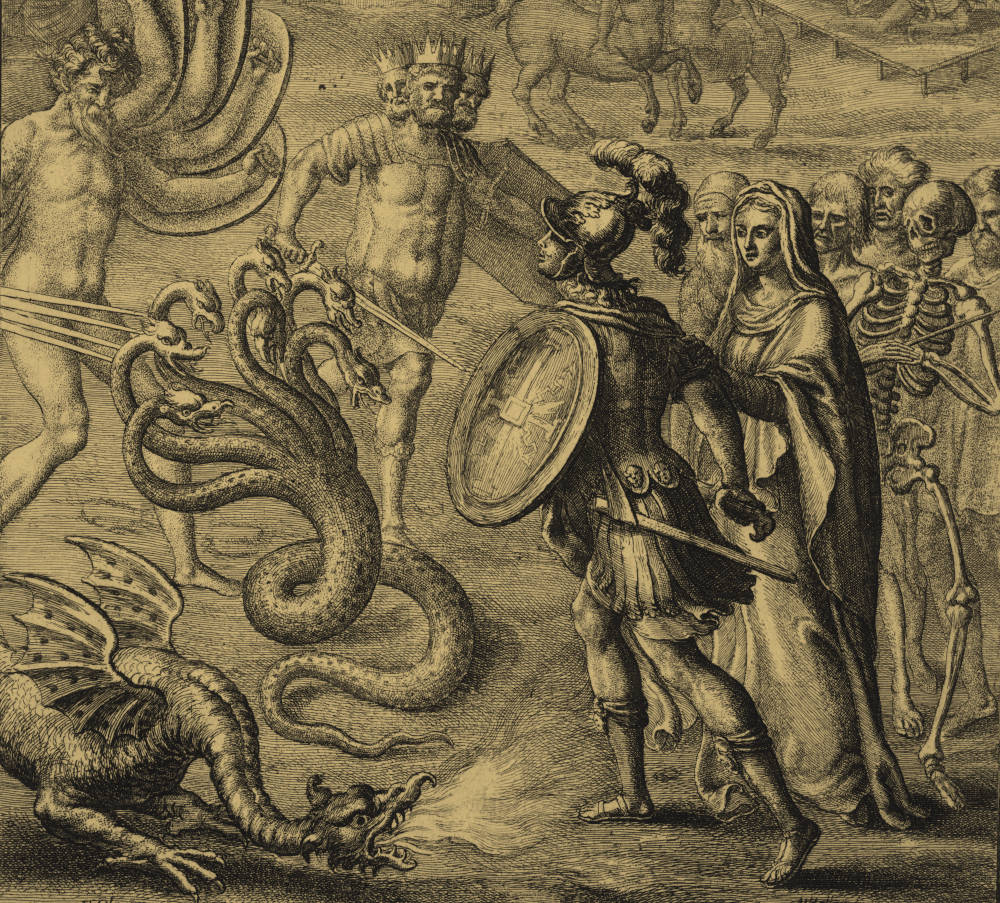
The above was written in August 2025, over a year ago. Then it sat there, unpublished forever. I told myself it was for lack of time. But the truth is: I forgot. Both, forgetting and melting time, seem to come naturally when you descend into the plague years. Faced with the daunting climb back up, forgetting becomes the more comfortable choice.
The old Greek word for a journey like this is katabasis[7]: a descent into the underworld. What separates the myths is what one brings back up. Orpheus went down for Eurydice and returned with nothing, because he looked back. Inanna was stripped of one garment at each of seven gates, and got out only by sending someone else down in her place. Aeneas went all the way down and came back up carrying the future of Rome, shown to him by his dead father.
A katabasis is not a fall. Not even a forced one. One descends on purpose in order to return, and one should not return empty-handed. So what do we carry back up from Twentytwentywhen? The answer is dirt simple: firsthand knowledge. It's not a blueprint or a manifesto, but the tangible, lived experience of which direction the opening lies in.
It's the opposite of the Gnostic ascent, of Fisher's future, of Land's Outside. It's downward and inward, toward the ground, the soil, the dead. It's not a direction toward some destination. It is the direction. And it has a name, one I've been quietly attaching to these essays all along, without once saying it out loud...
Stay tuned for the next part, in which we stop mapping and start digging, and find out we were never the only ones breathing down here.